The Toaster Is Named Deborah and She Has Done Nothing Wrong: A Break Room Experiment Gone Too Far
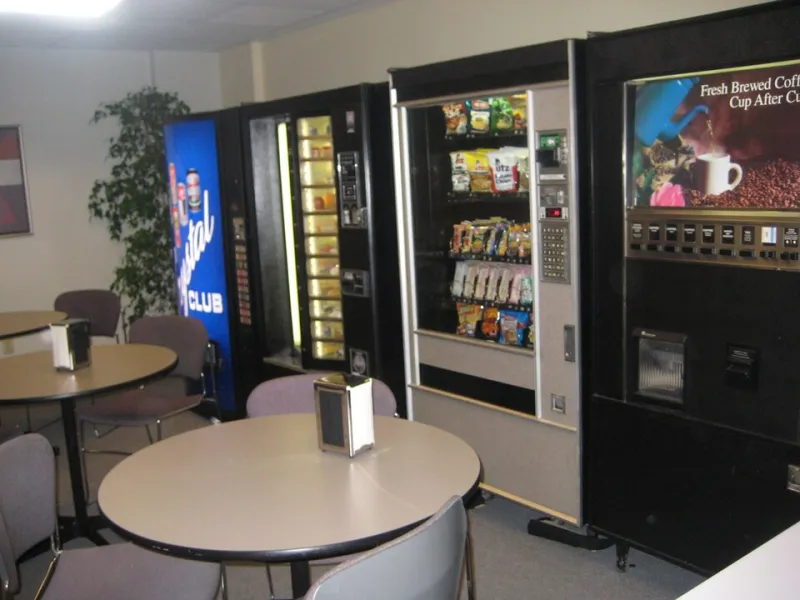
Photo: Kristin Dos Santos from Los Angeles, California, United States, CC BY-SA 2.0, via Wikimedia Commons
It started innocently. Someone — and I will never reveal who, mostly because it was me — wrote 'DEBORAH' on a sticky note and slapped it on the break room toaster. Deborah was, in our collective imagination, a hardworking single mother of four who deserved respect and the occasional crumb clearing.
By Friday, the microwave was Gerald. The mini fridge was Patricia, and Patricia was 'holding things in' (there was a leaked onion situation). The sad fern in the corner became Gregory, and Gregory was 'going through something.'
What followed was a month-long accidental experiment in human psychology, and honestly, the findings are disturbing.
Week One: The Naming Cascade
Anthropomorphizing objects, it turns out, is viral. Once Deborah existed, the break room became a naming gold rush. The coffee machine — now Kevin — was assigned a personality within the hour: 'tries his best, occasionally burns people.' A scientific review of this behavior suggests humans are wired to assign agency to anything with a face, or in Kevin's case, two dials that look vaguely like eyes.
The key finding: once an object has a name, people apologize to it. I watched a senior developer say 'sorry, Pat' after bumping the mini fridge. Pat does not care. Pat is a fridge.
Week Two: The Gregory Incident
Gregory the fern was not thriving. Someone printed a 'GET WELL SOON GREGORY' sign. Someone else bought him a tiny watering can. Then the drama: accounting accused marketing of overwatering Gregory out of 'a need for attention.' A passive-aggressive email chain titled 'Re: Gregory — watering schedule?' reached nine replies.
Gregory, a plant with the cognitive capacity of a damp sock, had become the office's most talked-about stakeholder.
Week Three: Factions Form
Deborah developed a jam-related incident (do not ask) and a faction emerged claiming Deborah was 'washed up' and that the toaster oven, now named Bryce, 'actually toasts.' The #teamdeborah Slack channel hit 14 members. Someone made a Deborah meme. The meme got framed.
Here's where it gets scientifically interesting: morale went up. People who'd never spoken were debating Bryce's merits. Psychologists call this a 'superordinate identity' — a fake shared problem that unites a group. We call it 'the Deborah effect.'
Week Four: HR Arrives
Day nine of week four, HR scheduled a 'casual chat about break room communications.' Apparently the Deborah-versus-Bryce debate had spilled into a client email. The meeting concluded with two official policies: objects may be named, but objects may not have 'campaign teams,' and Gregory must be watered 'by the facilities vendor only.'
Gregory was fine, by the way. Gregory was always fine. Gregory was a fern.
The Findings
- Humans will bond with a toaster in under 72 hours.
- A named object generates more emotional investment than most quarterly goals.
- Every office contains one person who takes the bit too far. In our office, that person was me, and Deborah and I are very happy together.
Name your appliances. Name your plants. Just establish a governance framework first, or you, too, will explain to HR why there's a framed portrait of a toaster in the break room.